

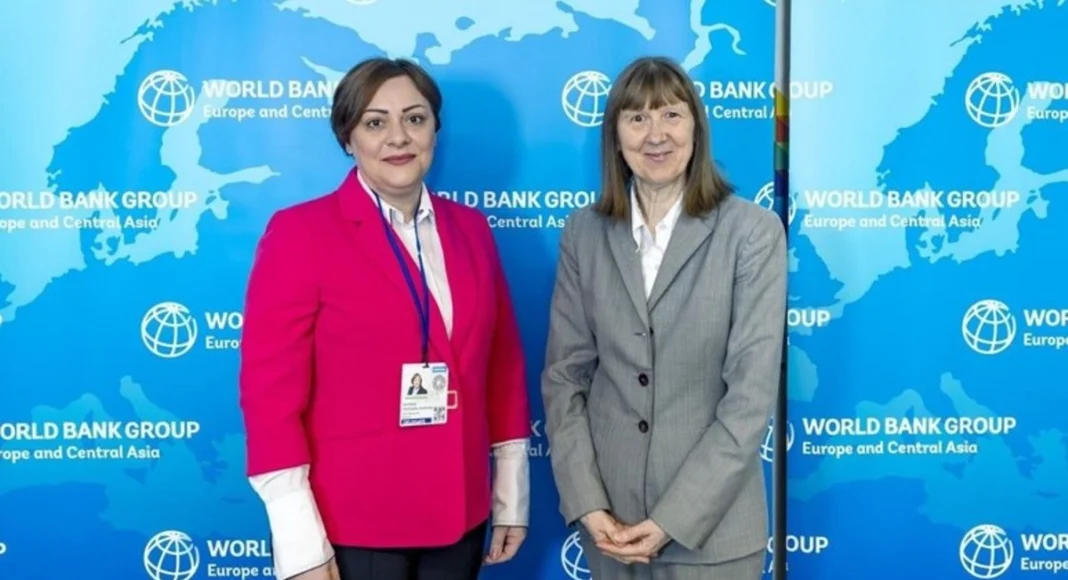

During the 2026 Spring Meetings of the International Monetary Fund (IMF) and the World Bank Group (WBG) Macedonian Minister of Finance Gordana Dimitrieska-Kochoska met with World Bank Vice President of the Europe and Central Asia region, Antonella Bassani, WB Group Executive Director representing the Dutch Constituency, Eugene Rhuggenaath and World Bank Country Manager for Kosovo and North Macedonia, Carole Megevand.
According to Dimitrieska-Kochoska’s office, discussions at the meeting focused on the existing cooperation between Macedonia and the World Bank, with emphasis that the international financial institution remains one of the country’s most important partners in supporting development policies, institutional reforms, and capital investments.
“The interlocutors reviewed the current portfolio of active projects aimed at improving public finances, modernizing infrastructure, energy efficiency, education, social protection, and agriculture. Special attention was given to the implementation of the World Bank Country Partnership Framework for the 2024-2028 period, which foresees significant financial and technical support for the country in the coming period,” the Office said in a press release.
In that regard, it was emphasized that key priorities remain improving the quality of public services, creating conditions for a more productive private sector and the opening of new jobs, as well as increasing the economy’s resilience to climate challenges.
Minister Dimitrieska-Kochoska underscored that the Government remains committed to implementing reforms that will ensure the maintenance of macroeconomic stability, sound public finances, and an improved standard of living for citizens. She emphasized that the partnership with the World Bank plays an important role in the implementation of structural reforms and in the realization of strategic investments that should contribute to long-term economic growth and greater economic competitiveness.
The discussions also focused on future cooperation between the state and the World Bank, with discussions on possibilities for supporting new strategic investments, as well as potential budget support linked to the implementation of reform processes. Particular interest was expressed in projects in the areas of energy, infrastructure, and public sector modernization, aimed at creating more sustainable economic growth and greater resilience of the economy to external challenges.