

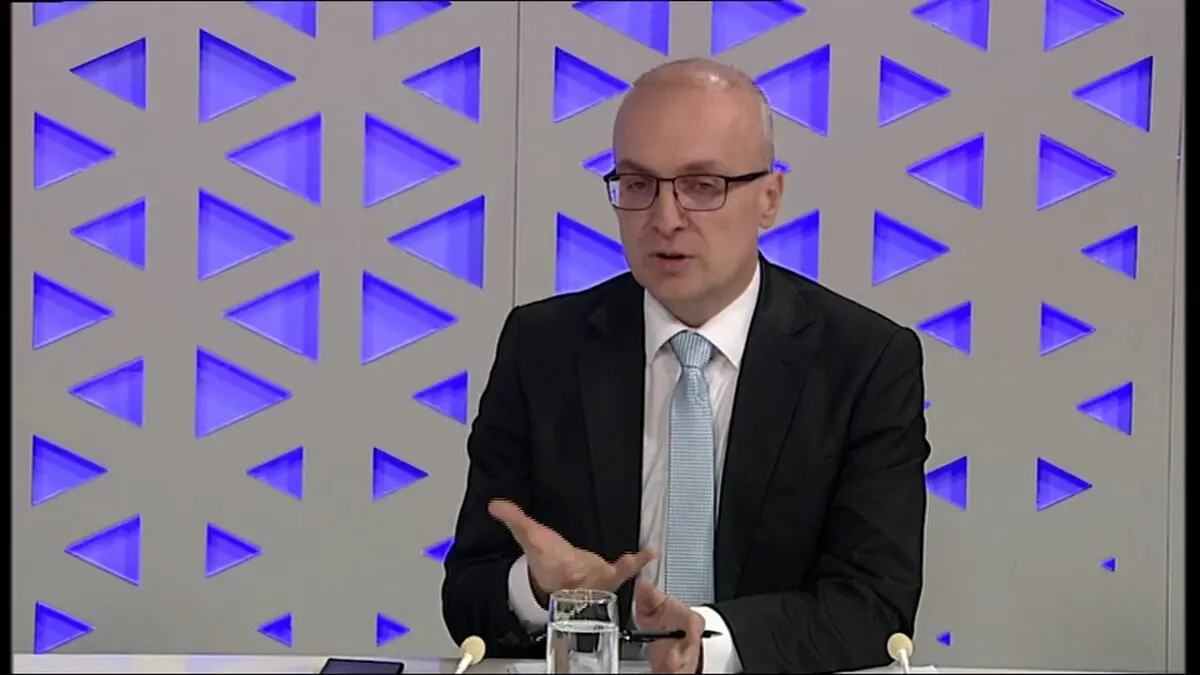

One of the arguments Filipche uses to manipulate the public, claiming that the Bulgarian demand for constitutional amendments poses no risk to the national identity, is the assertion that the negotiating framework guarantees the Macedonian language will become one of the official languages of the EU. According to VMRO-DPMNE MP Antonio Miloshoski, this is a major manipulation intended to create a false sense of security and to politically cover up the error made by the SDSM-led government when it accepted the inclusion of a bilateral Bulgarian issue as an integral part of the so-called French proposal.
“Unfortunately, this false claim by the SDSM president is refuted by EU documents themselves—including the recent strategy titled Preparing for a Wider Union, which highlight Article 55 of the Treaty on European Union and Article 342 of the Treaty on the Functioning of the European Union. The rule is simple: the official languages of EU institutions are determined, without exception, by a unanimous decision of the Council of the EU! In other words, the EU can adopt a new official language if requested by a candidate country currently in negotiations, but only on the condition that no member state raises an objection or exercises a veto against such a request,” said Miloshoski.
This decision-making methodology, he adds, combined with the Declaration submitted by official Sofia to the EU Council in July 2022 (which emphasizes that the mention of the Macedonian language in the negotiating framework cannot be interpreted as its recognition by Bulgaria), makes it obvious, even to a political amateur, which country will exercise a veto against the inclusion of the Macedonian language as an official EU language, should the country eventually join the Union.
“Unfortunately, these are the fruits of the servile signatures placed by the SDSM and DUI-led government on the Treaty on Good-Neighborly Relations from August 2017, as well as on the second protocol and the annex to that Treaty from July 2022. The ‘cheap’ signatures of Zaev and BujarOsmani will come at a high cost to Macedonia and will pose a constant risk to the official recognition of the Macedonian language within the EU. The use of the term ‘Macedonian language’ in the EU negotiating framework is not the same legal act as the requirement for a new, unanimous decision to include it among the official languages of the EU in the future. Given the stance taken by official Sofia thus far, a Bulgarian veto in that scenario is a dead certainty. Therefore, when it comes to identity issues and the Macedonian language, it is important to be aware of the reality: no document to date has confirmed, let alone guaranteed, that the Macedonian language would receive a unanimous decision for its inclusion as one of the official languages of the EU upon potential accession to the Union,”addedMP Miloshoski.