

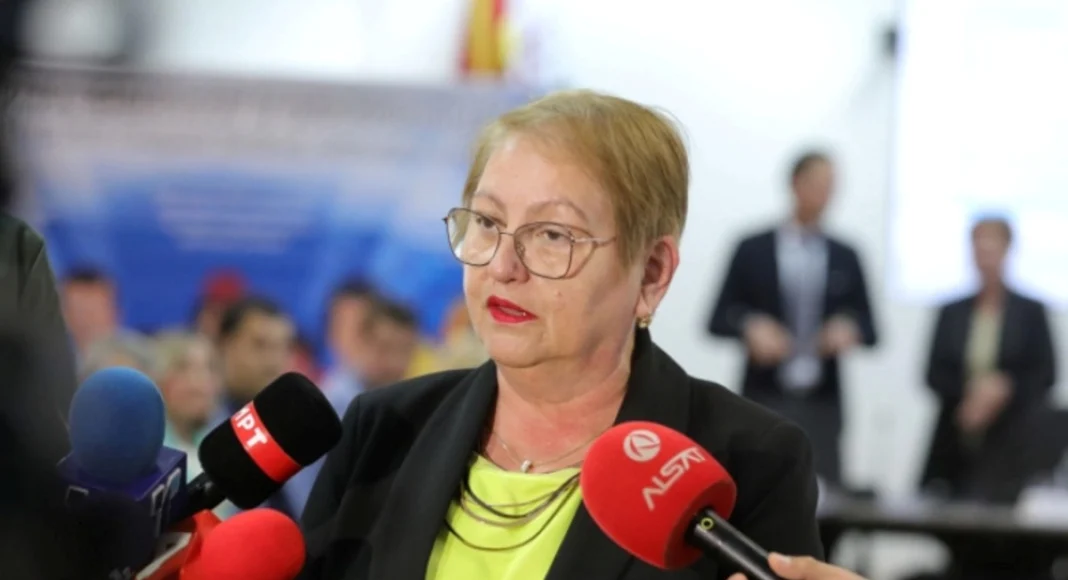

The Ministry of Education and Science is intensifying the implementation of education reforms. In accordance with the reform agenda, by December 2026, we have obligation to reach the number of 700 companies included in the dual education. That number has already been exceeded, with more than 800 companies now engaged in providing students with practical training directly at employers’ premises. This figure is expected to grow further, as companies recognize the benefit of participating in the quality education of skilled workers tailored to their needs, Macedonian Minister of Education and Science Vesna Janevska said Monday.
As Janevska stressed in her address on the occasion of the awarding of the EUR 500,000 grant to Shtip and Sveti Nikole schools and three companies, students also recognize the advantage of entering the labor market or higher education prepared not only with theoretical, but also with practical knowledge from specific jobs.
“That is why the number of students in dual classes in secondary vocational schools is increasing year by year. 66 percent of high school students are enrolled in vocational education. Of these, about 30 percent are enrolled in dual education. The interest of companies in increasing these numbers is clear – they need qualified workers who know how to operate equipment and are familiar with technology. This, among other advantages, also means reducing the costs of training after employment. Additionally, we are raising dual education to the level of higher education. The new Law on Higher Education, which will soon be voted in Parliament, provides the opportunity for practical teaching in mandatory subjects, for areas where it is applicable, to be carried out as dual education under the mentorship of experts from the real sector and a mentor from the appropriate study program at the university. This change is consistent with the European understanding of vocational education not only as a response to labor market skills shortages and skills mismatches, but also as a driver of social inclusion, digital transformation, territorial cohesion and long-term societal resilience,” Minister Janevska noted.